
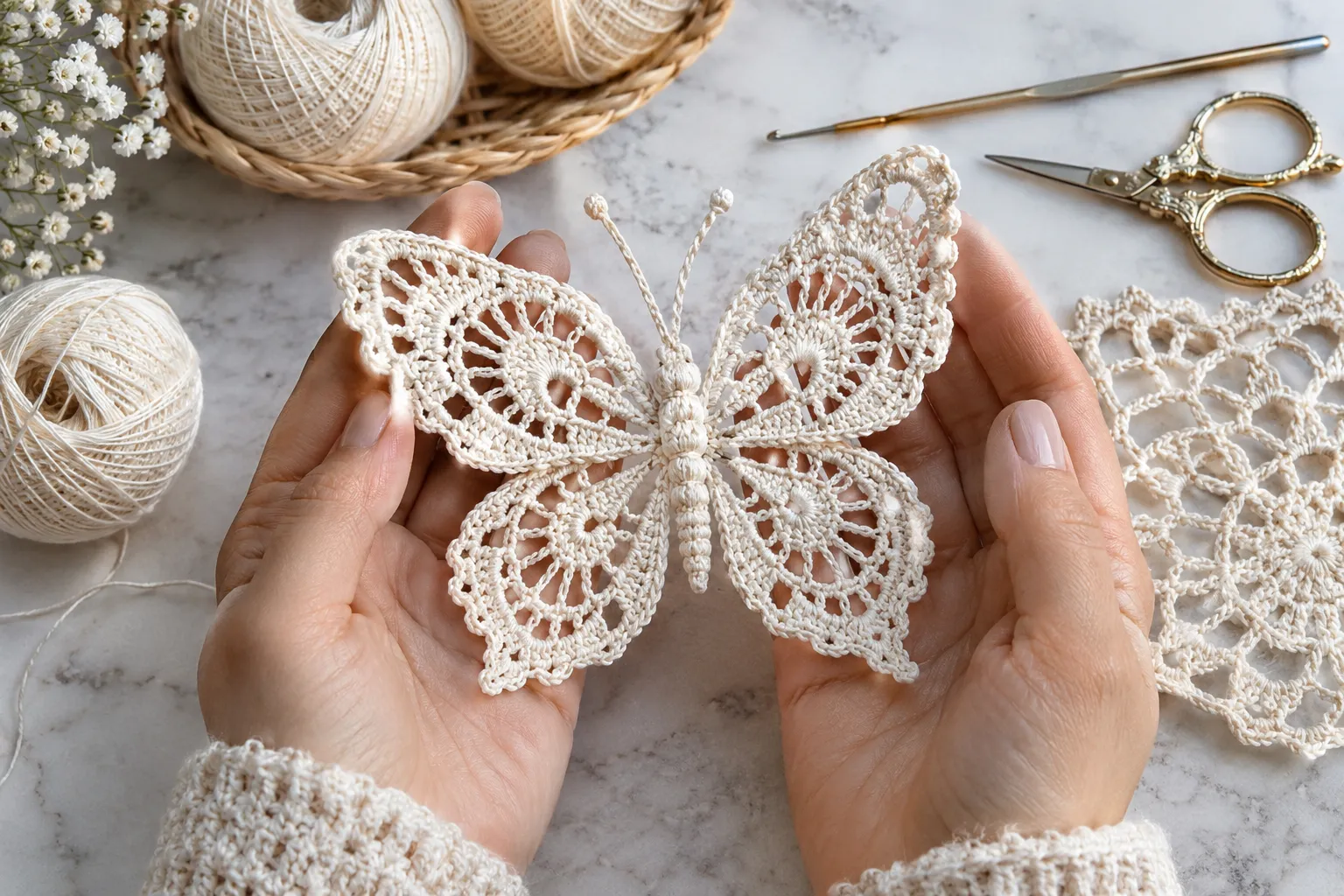
There’s something so beautiful about creating something delicate with just a little thread and a crochet hook.
A crochet butterfly is a wonderful example of how simple materials can become an intricate handmade creation. With fine yarn, carefully placed stitches, and a little patience, you can create beautiful butterfly wings that look light, airy, and almost lace-like.
The delicate cream butterfly shown in the inspiration image captures this perfectly. Its openwork wings, fine details, and soft neutral color give it an elegant and timeless appearance.
Crochet butterflies can be used for much more than decoration. They can become appliqués, bookmarks, hair accessories, brooches, garlands, ornaments, gifts, and beautiful additions to clothing and home decor.
Whether you’re an experienced crocheter or simply looking for a small project to practice your stitches, a delicate crochet butterfly is a beautiful project to try.
Why Crochet Butterflies Make Wonderful Projects
Butterflies have naturally delicate shapes, making them especially well suited to lace crochet.
Their wings give you the opportunity to experiment with:
- Openwork stitches
- Chain spaces
- Picot edges
- Shell stitches
- Decorative borders
- Fine crochet thread
- Contrasting colors
- Beaded details
A butterfly can also be made relatively small, so it doesn’t require a large amount of yarn.
This makes it an excellent project for using leftover thread from previous crochet projects.
What You Need to Crochet a Butterfly
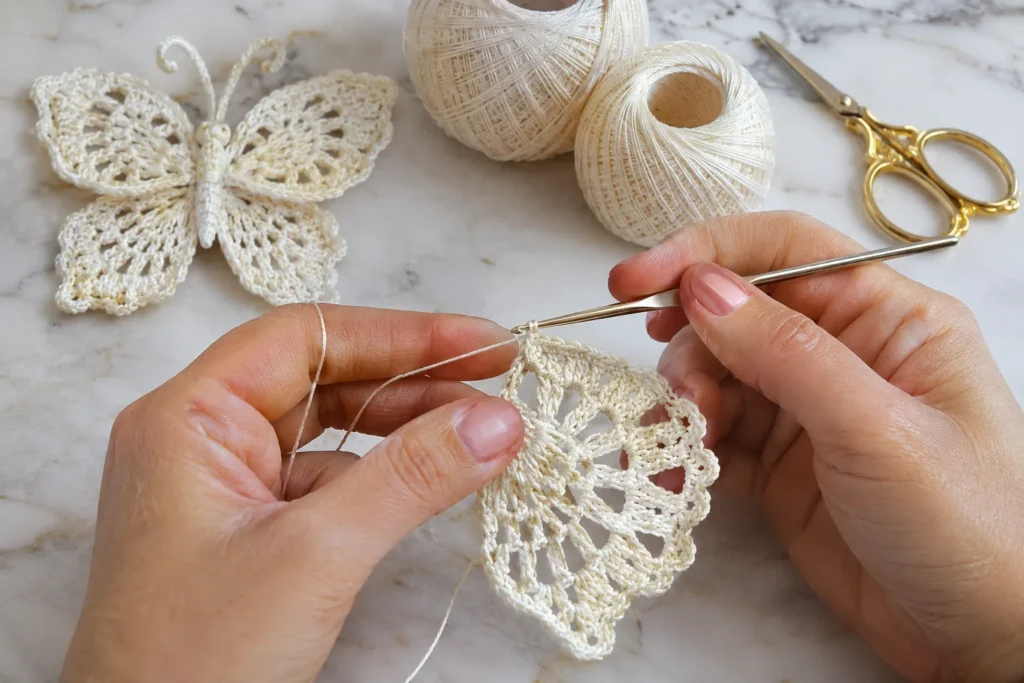
A delicate crochet butterfly doesn’t require a large collection of supplies.
For a basic project, you’ll need:
- Fine crochet thread or lightweight yarn
- A small crochet hook
- Yarn needle
- Small scissors
- Stitch marker if needed
- Optional beads
- Optional embroidery thread
- Optional wire for structured antennae
For the lacy appearance shown in the inspiration image, fine cotton crochet thread is an especially good choice.
Choosing Crochet Thread for a Delicate Butterfly
The thread you choose has a significant effect on the final appearance.
Fine Cotton Thread
Fine cotton thread creates crisp, clearly defined stitches and allows you to make intricate openwork wings.
It’s particularly suitable for:
- Lace butterflies
- Appliqués
- Jewelry
- Bookmarks
- Decorative motifs
Lightweight Cotton Yarn
If you’re still learning, a slightly thicker cotton yarn may be easier to handle.
The stitches will be larger and easier to see, while the finished butterfly will have a more substantial appearance.
Mercerized Cotton
Mercerized cotton can give a beautiful subtle sheen to your finished butterfly.
This can make delicate white or cream butterflies look especially elegant.
Choosing the Perfect Crochet Hook
When working with fine thread, a smaller hook is usually needed.
The exact hook size should depend on the thread you’re using and the tension you naturally crochet with.
If your stitches are too loose, the wings may look floppy and lose their definition.
If your stitches are extremely tight, the finished butterfly may become stiff and difficult to shape.
The goal is to create stitches that are neat while still allowing the delicate openwork pattern to remain visible.
The Beauty of Lace Crochet Butterfly Wings
The wings are what make a crochet butterfly so special.
Open spaces between stitches create the light, airy effect associated with lace.
You can use combinations of:
- Chain stitches
- Single crochet
- Double crochet
- Treble crochet
- Slip stitches
- Shell stitches
- Picot stitches
Different combinations create different wing patterns.
For a delicate butterfly, avoid making the wings too dense. Leaving carefully planned spaces between stitches helps create a more graceful appearance.
Crochet Butterfly With Four Delicate Wings
A traditional crochet butterfly often features four main wing sections.
The upper wings are generally larger, while the lower wings are smaller.
This creates the recognizable butterfly silhouette.
You can make all four wings symmetrical or introduce subtle differences in the stitch patterns.
For an elegant lace butterfly, keeping the wings symmetrical usually produces the most polished result.
Cream and White Crochet Butterflies
Neutral colors are perfect for delicate crochet butterflies.
Cream, ivory, and white thread emphasize the lace-like structure and allow the intricate stitches to become the main focus.
These colors work particularly well for:
- Wedding decor
- Nursery decorations
- Home decor
- Bridal accessories
- Gift wrapping
- Elegant appliqués
A cream butterfly can also be paired with natural linen, wood, and dried flowers for a beautiful rustic aesthetic.
Lavender and Pastel Crochet Butterflies
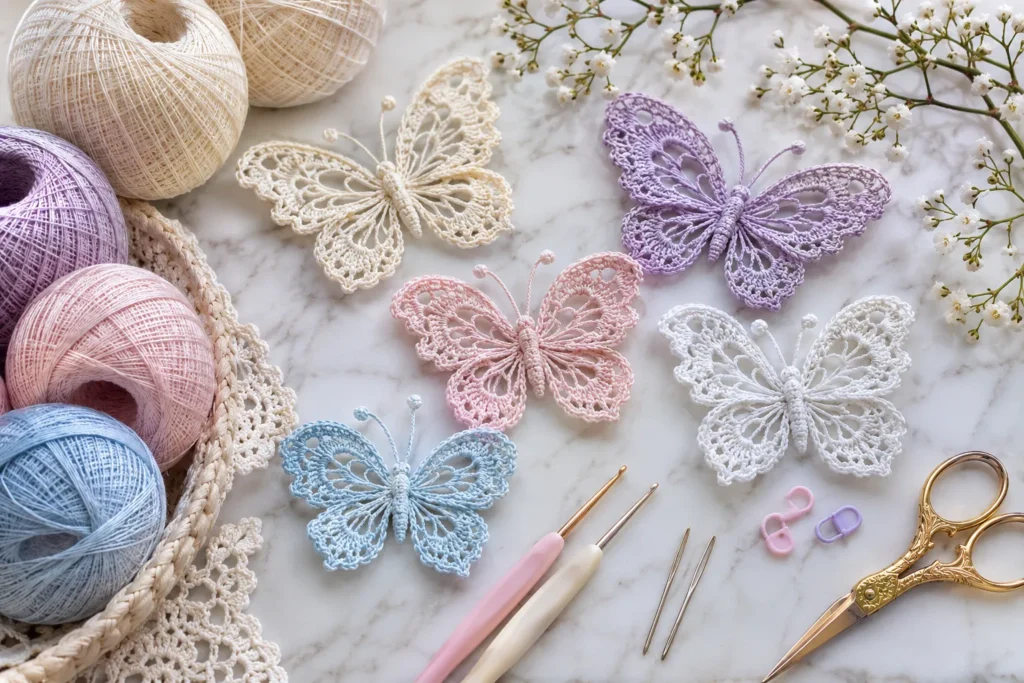
If you prefer something more colorful, pastel shades can create a soft spring-inspired look.
Try combinations such as:
Lavender + cream
Blush pink + white
Baby blue + ivory
Mint green + cream
Soft yellow + white
Pastel butterflies are especially beautiful for children’s accessories, spring decorations, and handmade gifts.
Add a Decorative Butterfly Border
One way to make a crochet butterfly stand out is to use a contrasting border.
For example, make the main wings cream and add a lavender edge.
Or create a white butterfly with a soft pink border.
A contrasting edge can emphasize the shape of each wing and make the openwork details more visible.
Crochet Butterfly Appliqués
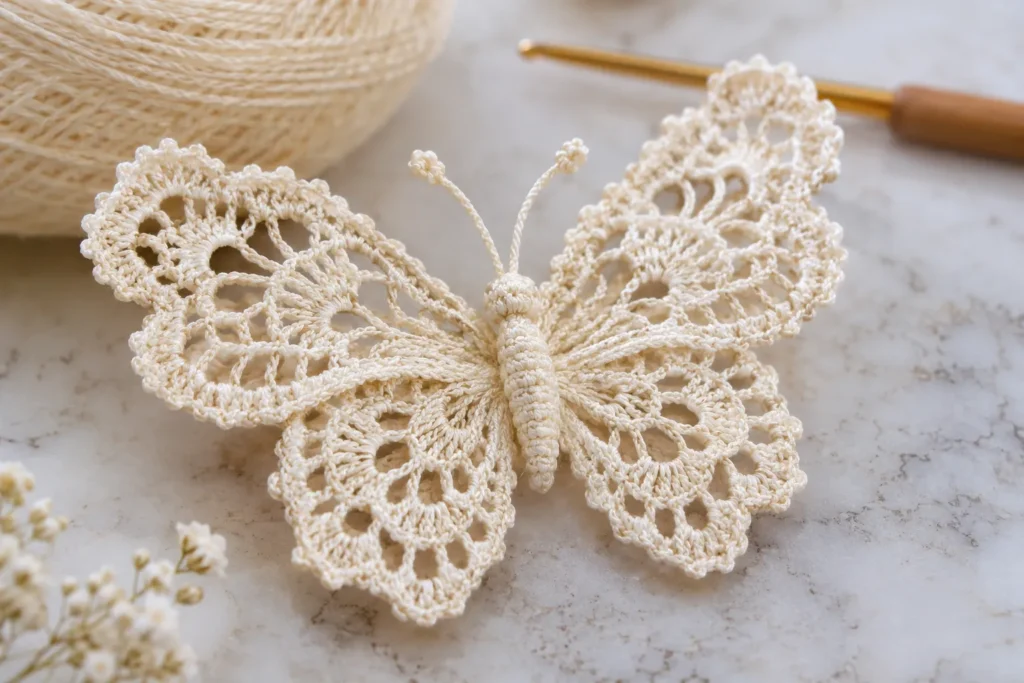
Small butterflies are perfect for appliqué projects.
You can sew them onto:
- Cardigans
- Sweaters
- Scarves
- Hats
- Tote bags
- Purses
- Blankets
- Pillows
- Children’s clothing
A single butterfly can add a subtle decorative detail, while several butterflies can create an entire garden-inspired design.
For clothing, make sure the butterfly and any embellishments are securely attached.
Crochet Butterfly Hair Accessories
A delicate butterfly can become a beautiful handmade hair accessory.
Try attaching a small butterfly to:
- Hair clips
- Barrettes
- Headbands
- Hair combs
- Scrunchies
Cream or pastel butterflies work particularly well for elegant spring and summer accessories.
A small pearl or bead in the center can add an extra refined touch.
Crochet Butterfly Brooch
Another simple way to use a finished butterfly is to turn it into a brooch.
Attach an appropriate brooch backing to the reverse side of the butterfly.
A neutral butterfly can complement many outfits, while colorful butterflies can become statement accessories.
For a more dimensional brooch, layer two butterflies of slightly different sizes.
Crochet Butterfly Bookmark
A small lace butterfly can make an adorable bookmark.
Create a butterfly at one end of a long crochet chain or attach it to a ribbon.
This is an excellent quick project and makes a thoughtful handmade gift for someone who loves reading.
Cream, beige, lavender, and dusty pink are particularly beautiful choices.
Crochet Butterfly Garland
Make several butterflies and connect them together to create a delicate garland.
You can use:
- Neutral butterflies
- Pastel butterflies
- Rainbow butterflies
- Different butterfly sizes
Hang the finished garland across a wall, shelf, window, nursery, or craft room.
For a more natural look, combine butterflies with small crochet flowers and leaves.
Crochet Butterfly Wall Decor
Large crochet butterflies can become beautiful wall decorations.
Create several butterflies in different sizes and arrange them as if they’re flying across the wall.
For example, start with smaller butterflies and gradually increase their size toward the center of the display.
Use a coordinated color palette so the collection feels cohesive.
Cream, ivory, lavender, blush, and sage green work especially well together.
Crochet Butterflies for Nursery Decor
Butterflies are beautiful for nursery and children’s room decorations.
Create a collection of pastel butterflies and combine them with crochet flowers, clouds, leaves, and small stars.
A soft palette of:
- Cream
- Lavender
- Blush pink
- Mint
- Pale blue
can create a peaceful nature-inspired atmosphere.
For nursery projects, avoid loose small embellishments that could present a safety risk.
Crochet Butterfly Jewelry
Fine crochet thread can also be used to make delicate butterfly jewelry.
Small butterflies can become:
- Earrings
- Pendants
- Bracelets
- Brooches
- Hair ornaments
Because thread crochet can be extremely lightweight, it can produce surprisingly delicate accessories.
Combine the crochet element with simple metal findings or small beads for a refined handmade appearance.
Add Beads to Your Crochet Butterfly
Tiny beads can add beautiful details to a butterfly.
Try placing them:
- Along the wing edges
- In the center
- Around the body
- At the tips of the wings
Pearl-like beads look especially elegant with cream or white thread.
For a more colorful design, use beads that complement the yarn.
Make sure any small embellishments are firmly secured, particularly when making items for children.
Creating the Butterfly Body
The body provides structure and visually connects the four wings.
It can be made using:
- Crochet stitches
- Wrapped thread
- Embroidery
- A narrow crocheted strip
For a simple butterfly, a slightly raised crocheted body can give the wings more definition.
A contrasting body color can also make the wings stand out.
Don’t Forget the Antennae
Antennae are a small detail, but they make the butterfly immediately recognizable.
They can be created using:
- Fine yarn
- Crochet chains
- Embroidery thread
- Thin floral wire
For a soft decorative butterfly, yarn or thread is usually sufficient.
If you want the antennae to hold a specific shape, carefully shaped wire can provide additional structure.
Blocking a Crochet Butterfly
Blocking can make a significant difference to a lace butterfly.
After finishing the piece, gently stretch and shape the wings until they are symmetrical.
Blocking can help:
- Open up lace stitches
- Define the wing edges
- Improve symmetry
- Flatten curled sections
- Make the pattern easier to see
For the delicate butterfly in the inspiration image, careful shaping is especially important because the openwork wings need to remain clearly defined.
Always use a blocking method appropriate for your yarn or thread.
How to Make Your Butterfly More Three-Dimensional
A flat butterfly is beautiful, but you can also give it a little dimension.
Try gently shaping the wings upward rather than keeping them completely flat.
You can also slightly curve the body.
For decorative butterflies, this can create the impression that the butterfly is ready to fly.
Crochet Butterfly Color Ideas
Here are some combinations to experiment with:
| Style | Main Color | Accent |
|---|---|---|
| Elegant | Ivory | Cream |
| Romantic | Blush pink | White |
| Lavender Garden | Lavender | Ivory |
| Spring | Mint | Soft yellow |
| Sky Blue | Pale blue | White |
| Natural | Beige | Sage green |
| Bold | Purple | Gold |
| Rainbow | Multiple pastels | White |
Keeping a consistent palette is especially useful when making several butterflies for a larger project.
Crochet Butterflies for Weddings
Delicate crochet butterflies can make beautiful handmade wedding decorations.
They can be used as:
- Table decorations
- Place-setting accents
- Gift embellishments
- Bridal accessories
- Wedding favors
- Garland decorations
- Ring-box decorations
Ivory and white butterflies are particularly suitable for elegant wedding styling.
Adding tiny pearl beads can create a subtle romantic detail.
Crochet Butterfly Gift Ideas
A handmade butterfly can easily become part of a thoughtful gift.
Create a small collection containing:
- A butterfly bookmark
- A butterfly brooch
- A butterfly hair clip
- A small butterfly ornament
Package the pieces in a simple kraft box or fabric pouch.
Because butterflies are associated with beauty and transformation, they can also make meaningful handmade gifts for special occasions.
Using Leftover Crochet Thread
Small butterflies are perfect for using leftover thread.
Instead of throwing away small amounts of beautiful yarn, keep them organized by color.
When you have enough scraps, you can create a collection of butterflies in different shades.
This is a great way to experiment with combinations without buying new yarn for every project.
Common Problems When Crocheting Lace Butterflies
The Wings Look Too Loose
Your tension may be too relaxed.
Try using a slightly smaller hook or maintaining more consistent tension.
The Butterfly Doesn’t Lie Flat
Check your stitch count and consider blocking the finished piece.
The Wings Look Uneven
Count your stitches carefully and compare the two sides as you work.
The Lace Details Aren’t Visible
Your yarn may be too thick for the stitch pattern.
A finer thread can help reveal more delicate openwork.
The Butterfly Loses Its Shape
Blocking can help, but the yarn choice also matters.
A cotton thread with good stitch definition can provide better structure.
How to Care for Delicate Crochet Butterflies
Lace crochet should be handled gently.
Keep delicate butterflies away from excessive moisture and avoid pulling on individual stitches.
For decorative pieces, gently remove dust with a soft brush.
If washing is appropriate for your yarn, follow the manufacturer’s care instructions.
After washing, reshape the butterfly carefully and allow it to dry completely.
Create a Crochet Butterfly Collection
Once you’ve made one butterfly, it can be difficult to stop.
Create a collection using different sizes, colors, and stitch patterns.
For example:
Small cream butterfly → medium lavender butterfly → large blush butterfly
Arrange them together as wall art or use them throughout your home.
A coordinated collection can create a beautiful handmade botanical theme.
Final Thoughts
There’s something so beautiful about creating something delicate with just a little thread and a crochet hook.
A crochet butterfly may be a small project, but it offers endless creative possibilities. Fine thread can transform simple stitches into delicate lace wings, while different colors, borders, beads, and embellishments allow you to make each butterfly completely your own.
Use your finished butterflies as appliqués, accessories, bookmarks, decorations, gifts, or part of a larger crochet garden.
Start with a simple design, practice your tension, carefully shape the wings, and experiment with your favorite colors.
Sometimes, the most delicate creations are made from the simplest materials.