

If you love light, fluffy cakes with a refreshing citrus flavor, this Lemon Vanilla Dream Cake deserves a place in your recipe collection. It combines the delicate sweetness of vanilla with the bright, fresh taste of lemon, creating a soft and tender cake that feels like sunshine in every bite.
The crumb is wonderfully moist and airy, while fresh lemon zest and juice bring a delicious citrus aroma. A smooth vanilla frosting adds a creamy finishing touch without overpowering the refreshing lemon flavor.
Whether you’re preparing a weekend dessert, celebrating a birthday, hosting afternoon tea, or simply craving something homemade, this cake is an easy and beautiful choice.
Why You’ll Love This Lemon Vanilla Dream Cake
- Soft and fluffy texture: A tender, light crumb that practically melts in your mouth.
- Fresh lemon flavor: Lemon zest and juice provide a bright citrus taste.
- Sweet vanilla aroma: Vanilla balances the tanginess of the lemon beautifully.
- Creamy frosting: A smooth vanilla-lemon topping makes every slice extra special.
- Perfect for any occasion: Ideal for birthdays, family gatherings, holidays, and afternoon treats.
- Simple ingredients: Made with everyday baking ingredients.
Ingredients You’ll Need
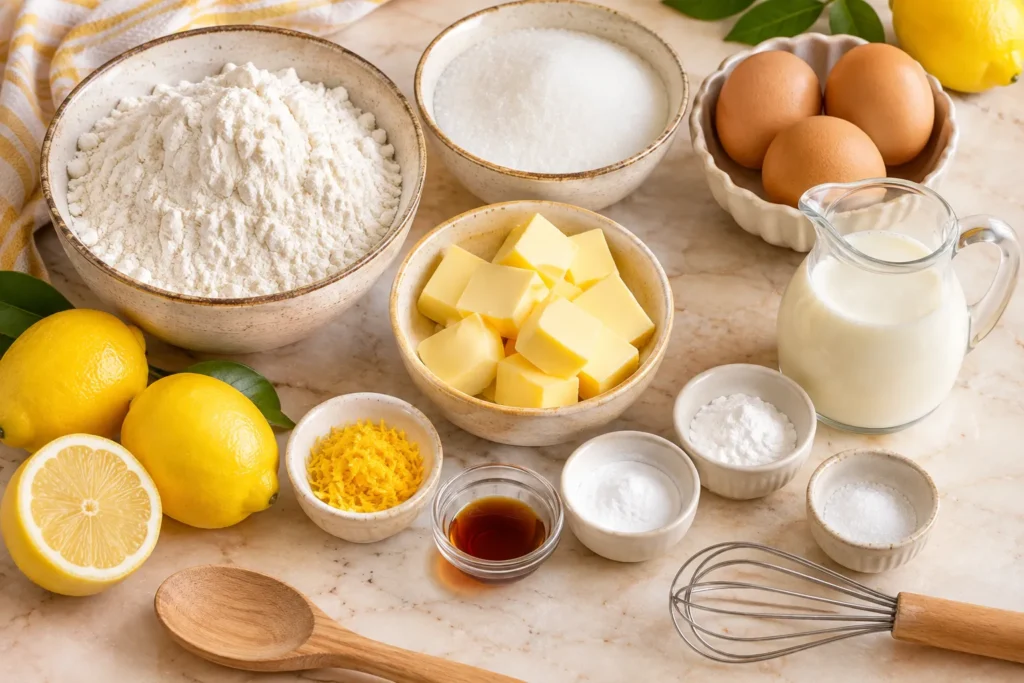
For the Lemon Vanilla Cake
- 2 ½ cups (315 g) all-purpose flour
- 2 teaspoons baking powder
- ½ teaspoon baking soda
- ½ teaspoon salt
- ¾ cup (170 g) unsalted butter, softened
- 1 ½ cups (300 g) granulated sugar
- 3 large eggs, at room temperature
- 2 teaspoons pure vanilla extract
- 2 tablespoons finely grated lemon zest
- ¼ cup (60 ml) fresh lemon juice
- 1 cup (240 ml) buttermilk, at room temperature
For the Vanilla Lemon Frosting
- ½ cup (115 g) unsalted butter, softened
- 2 cups (240 g) powdered sugar
- 1 teaspoon vanilla extract
- 1 tablespoon fresh lemon juice
- 1–2 tablespoons milk or heavy cream
- A little lemon zest for garnish
How to Make Lemon Vanilla Dream Cake
Step 1: Prepare Your Baking Pan
Preheat your oven to 350°F (175°C). Grease a 9-inch round cake pan and line the bottom with parchment paper.
If you prefer a layered cake, you can divide the batter between two 8-inch round pans and adjust the baking time.
Step 2: Combine the Dry Ingredients
In a medium bowl, whisk together the flour, baking powder, baking soda, and salt.
Mixing these ingredients separately helps distribute the raising agents evenly throughout the batter, giving the cake a consistent rise.
Set the bowl aside.
Step 3: Cream the Butter and Sugar
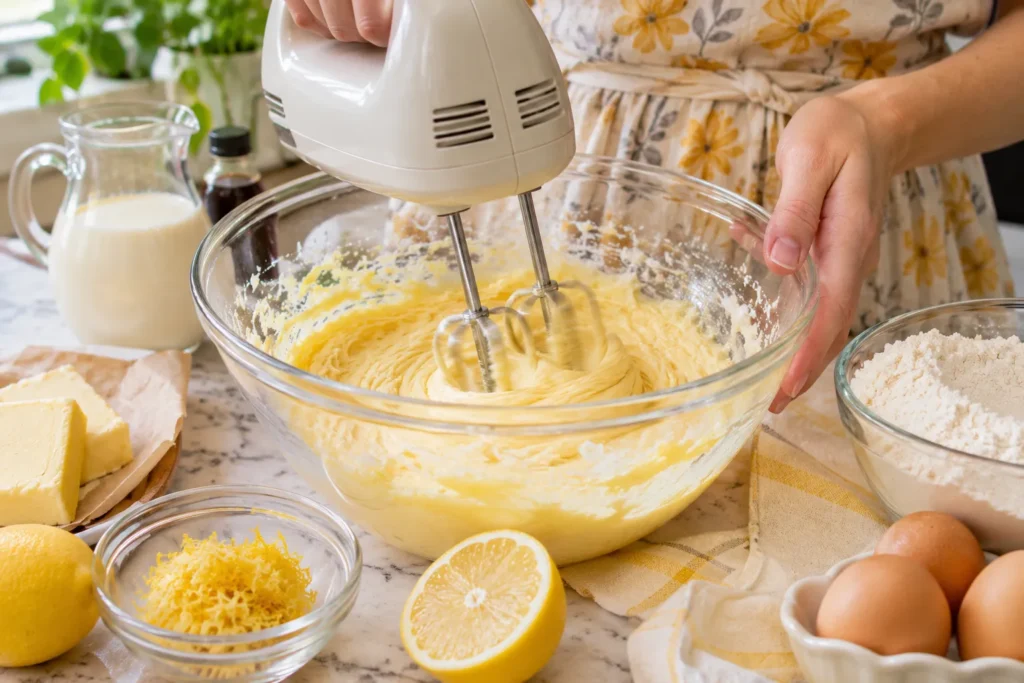
In a large mixing bowl, beat the softened butter and granulated sugar for about 3–4 minutes, until the mixture becomes pale, light, and fluffy.
This step is important because incorporating air into the butter helps create a softer cake texture.
Step 4: Add the Eggs, Vanilla, and Lemon
Add the eggs one at a time, beating well after each addition.
Mix in the vanilla extract and fresh lemon zest. Add the lemon juice and mix briefly until combined.
The mixture may look slightly separated after adding the lemon juice. This is usually fine; the dry ingredients and buttermilk will help bring the batter together.
Step 5: Alternate the Dry Ingredients and Buttermilk
Add about one-third of the flour mixture to the butter mixture and mix on low speed.
Pour in half of the buttermilk, followed by another portion of the flour mixture. Repeat, finishing with the remaining flour.
Mix only until the ingredients are combined. Avoid overmixing, as this can make the cake dense instead of fluffy.
Step 6: Bake Until Golden
Pour the batter into the prepared cake pan and gently smooth the top.
Bake for approximately 30–38 minutes, or until a toothpick inserted into the center comes out clean or with a few moist crumbs.
Allow the cake to cool in the pan for about 10–15 minutes before transferring it to a wire rack.
Let it cool completely before frosting.
Step 7: Prepare the Vanilla Lemon Frosting
Beat the softened butter until creamy and smooth.
Gradually add the powdered sugar, mixing on low speed at first to prevent it from scattering.
Add the vanilla extract, lemon juice, and one tablespoon of milk or cream. Beat until the frosting becomes light and fluffy.
If the frosting is too thick, add a little more milk. If it is too soft, add a little extra powdered sugar.
Step 8: Frost and Decorate
Spread the frosting evenly over the completely cooled cake.
Finish with a sprinkle of fresh lemon zest. You can also add thin lemon slices or a few small edible flowers for an elegant presentation.
Slice, serve, and enjoy!
Tips for the Softest, Fluffiest Cake
Use room-temperature ingredients. Butter, eggs, and buttermilk combine more easily when they are not cold. This helps create a smooth batter and an even texture.
Choose fresh lemons. Fresh lemon juice and zest provide a much brighter flavor than bottled lemon juice.
Don’t skip the lemon zest. Most of the lemon’s fragrant oils are found in the peel. Finely grated zest gives the cake its wonderful citrus aroma.
Avoid overmixing. Once the flour is added, mix gently and only until combined. Too much mixing can develop gluten and make the cake tough.
Measure the flour correctly. Spoon flour into your measuring cup and level it off rather than packing it down. Too much flour can make the cake dry.
Let the cake cool completely. Frosting a warm cake can cause the buttercream to melt and slide off.
Delicious Variations to Try
Lemon Cream Cheese Frosting
For a slightly tangy topping, replace part of the butter frosting with softened cream cheese. Beat it with powdered sugar, vanilla, and a little lemon zest until smooth.
Lemon Blueberry Dream Cake
Fold ¾ cup of fresh or frozen blueberries into the finished batter. If using frozen blueberries, add them directly without thawing. A light coating of flour can help distribute them more evenly.
Extra Vanilla Flavor
Add an additional ½ teaspoon of vanilla extract for a stronger vanilla aroma. Vanilla bean paste also works beautifully.
Coconut Lemon Cake
Add ½ cup of finely shredded sweetened coconut to the batter for a tropical twist. Sprinkle toasted coconut over the frosting before serving.
Lemon Glaze Instead of Frosting
If you prefer a lighter finish, whisk together 1 cup powdered sugar and 2–3 tablespoons fresh lemon juice. Drizzle over the cooled cake for a glossy citrus topping.
What to Serve with Lemon Vanilla Dream Cake
This cake is delicious on its own, but it also pairs wonderfully with:
- Fresh strawberries, raspberries, or blueberries
- A cup of hot tea or freshly brewed coffee
- Homemade whipped cream
- A scoop of vanilla ice cream
- Fresh fruit salad
- A light berry sauce
For a summer dessert, serve each slice with fresh berries and a spoonful of whipped cream.
How to Store Lemon Vanilla Dream Cake

At room temperature: If the cake has a butter-based frosting and your kitchen is cool, it can generally be kept covered for up to 1 day. For longer storage, refrigeration is recommended.
In the refrigerator: Store the frosted cake in an airtight container for up to 4 days. Let individual slices sit at room temperature for 15–20 minutes before serving for the best texture.
In the freezer: You can freeze unfrosted cake layers, tightly wrapped, for up to 2 months. Thaw overnight in the refrigerator and bring to room temperature before frosting.
Frequently Asked Questions
Can I make this cake ahead of time?
Yes! Bake the cake a day ahead, allow it to cool completely, and wrap it tightly. Prepare the frosting separately or frost the cake before refrigerating.
Can I use bottled lemon juice?
Fresh lemon juice is recommended for the best flavor. Bottled lemon juice can work in a pinch, but fresh zest is especially important for the cake’s citrus aroma.
Why did my lemon cake turn out dense?
The most common reasons are overmixing the batter, adding too much flour, using cold ingredients, or using baking powder that has lost its effectiveness. Measure carefully and mix gently once the flour is added.
Can I make this recipe into cupcakes?
Yes. Divide the batter between lined muffin cups, filling each about two-thirds full. Bake at 350°F (175°C) for approximately 18–22 minutes, checking with a toothpick.
Can I make this cake without buttermilk?
Yes. Mix 1 tablespoon of lemon juice or white vinegar into a measuring cup, then add enough milk to reach 1 cup. Let it stand for 5–10 minutes before using.
How can I make the lemon flavor stronger?
Increase the lemon zest slightly, using up to 3 tablespoons. Avoid adding too much extra lemon juice because it can change the batter’s liquid balance.
Final Thoughts
This Lemon Vanilla Dream Cake is everything a homemade citrus dessert should be: soft, fluffy, moist, fragrant, and beautifully balanced between sweet vanilla and fresh lemon.
Its delicate crumb and creamy frosting make it perfect for celebrations or simple moments when you want something special with your afternoon coffee.
Make it once, and this sunshine-filled cake may quickly become one of your favorite homemade desserts!