
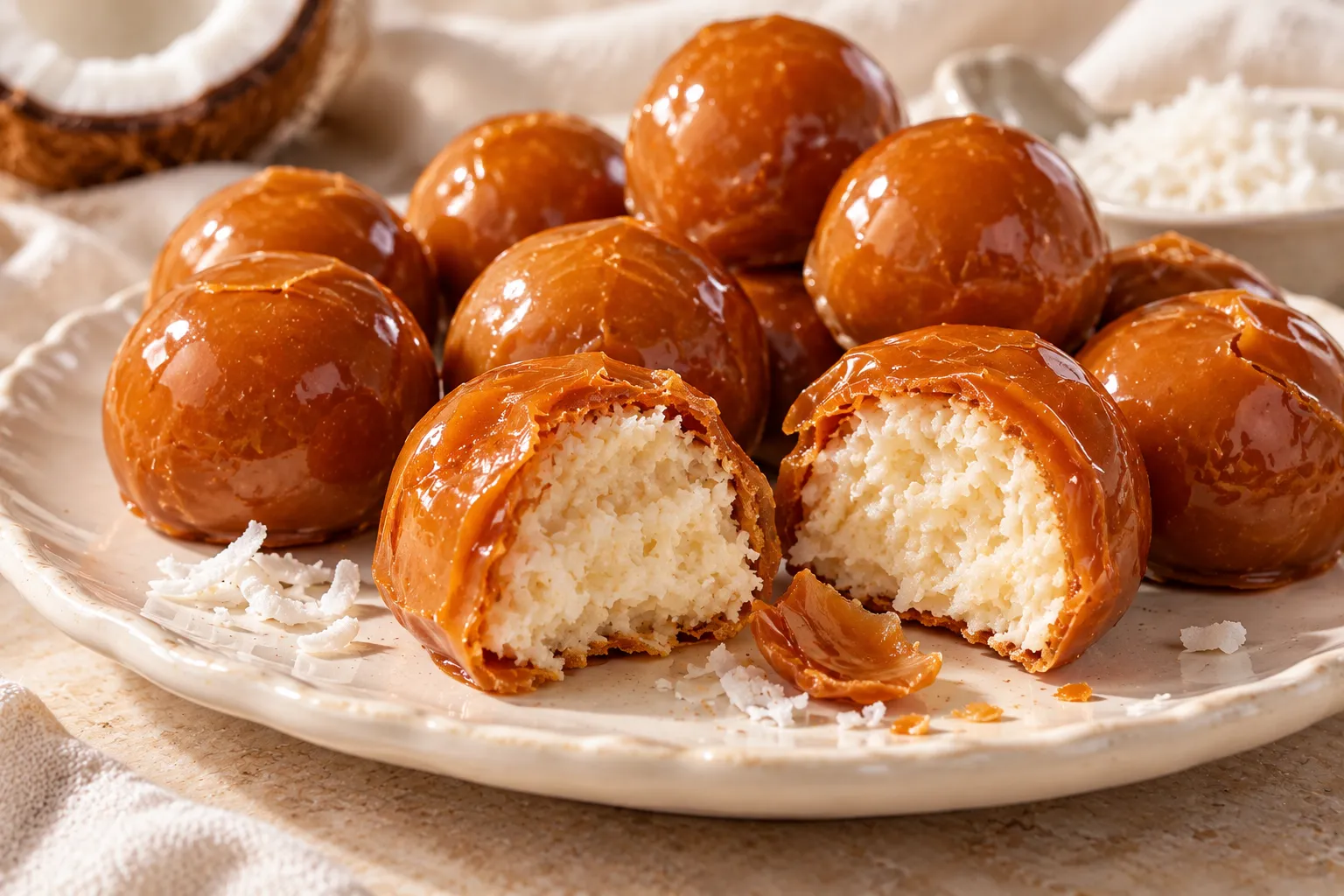
Bala Baiana is a beloved Brazilian sweet made with a soft, creamy coconut filling wrapped in a thin, crunchy caramel shell. Every bite delivers a delicious contrast of textures: a tender, coconut-rich center followed by a crisp layer of golden caramel that cracks beautifully when you bite into it.
These homemade coconut caramel candies look elegant enough for parties, dessert tables, and homemade gifts, yet they require only a handful of everyday ingredients. The secret is preparing a smooth coconut filling, chilling it until firm, and coating each piece in caramel cooked to the right temperature.
If you love coconut desserts and crunchy caramel sweets, this Bala Baiana recipe is a wonderful treat to make at home.
What Is Bala Baiana?
Bala Baiana is a traditional Brazilian confection often prepared with a creamy coconut mixture shaped into small balls and coated in hard caramel. It is sometimes called bala de coco caramelizada or Brazilian caramel coconut candy.
Unlike soft coconut truffles, Bala Baiana has a delicate sugar shell that hardens around the filling. The outside becomes crisp and glossy, while the inside stays soft, sweet, and creamy.
The combination makes these candies especially appealing for celebrations, birthdays, dessert tables, and festive occasions. They can also be individually wrapped for homemade gifts, provided the caramel remains dry and crisp.
Why You’ll Love This Recipe
- Crispy caramel coating: The thin sugar shell creates a satisfying crunch with every bite.
- Creamy coconut filling: Sweetened condensed milk and shredded coconut create a rich, tender center.
- Simple ingredients: You only need a few basic ingredients to prepare the filling and caramel.
- Beautiful homemade candy: The glossy golden coating makes each piece look special.
- Perfect for celebrations: Serve these candies at parties, family gatherings, or holiday dessert tables.
- A delicious make-at-home treat: With the right technique, you can recreate this Brazilian sweet in your own kitchen.
Ingredients for Crispy Caramel Bala Baiana
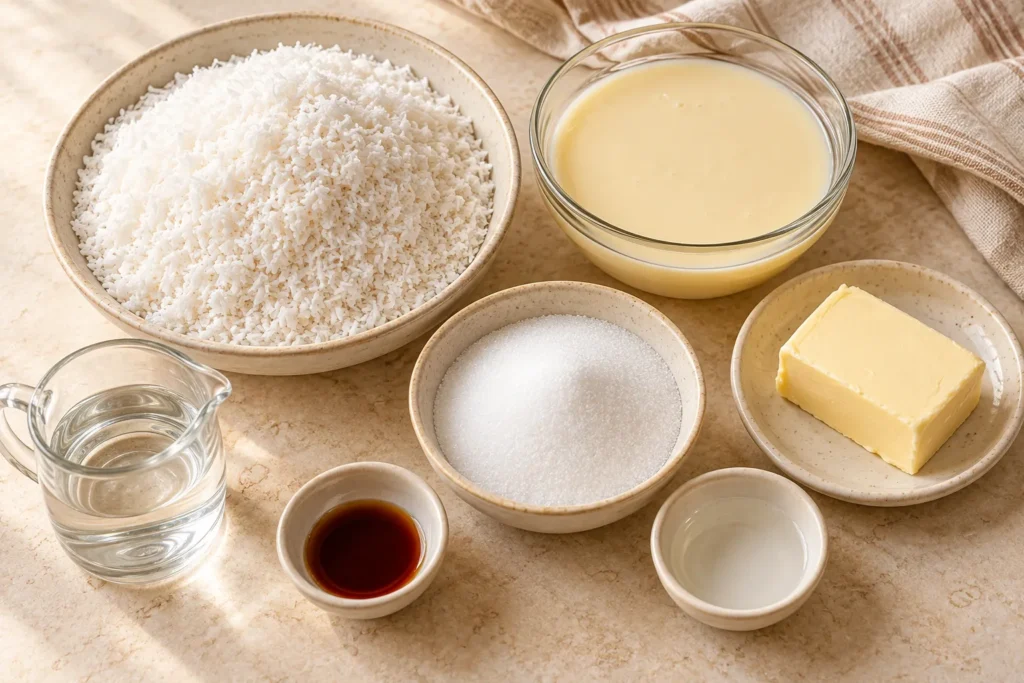
This recipe makes approximately 18–22 small candies, depending on the size of the coconut balls.
For the Creamy Coconut Center
- 1 can (395 g) sweetened condensed milk
- 150 g unsweetened desiccated coconut or finely shredded coconut
- 1 tablespoon (14 g) unsalted butter
- 1 teaspoon vanilla extract, optional
- A small pinch of salt, optional
For the Crispy Caramel Coating
- 300 g granulated white sugar
- 120 ml water
- 1 tablespoon white vinegar or lemon juice
The vinegar or lemon juice helps limit sugar crystallization when preparing the caramel. Use a clean saucepan and avoid stirring the syrup once it begins boiling.
Equipment You’ll Need
- A medium, heavy-bottomed saucepan
- A heat-resistant spatula or wooden spoon
- A baking tray lined with parchment paper or a silicone mat
- A candy thermometer, ideally
- A small bowl of cold water, if using the traditional cold-water test
- A fork, candy-dipping tool, or heat-resistant skewer
- A lightly buttered plate for cooling the coconut mixture
How to Make Bala Baiana with a Creamy Coconut Center
Step 1: Cook the Coconut Filling
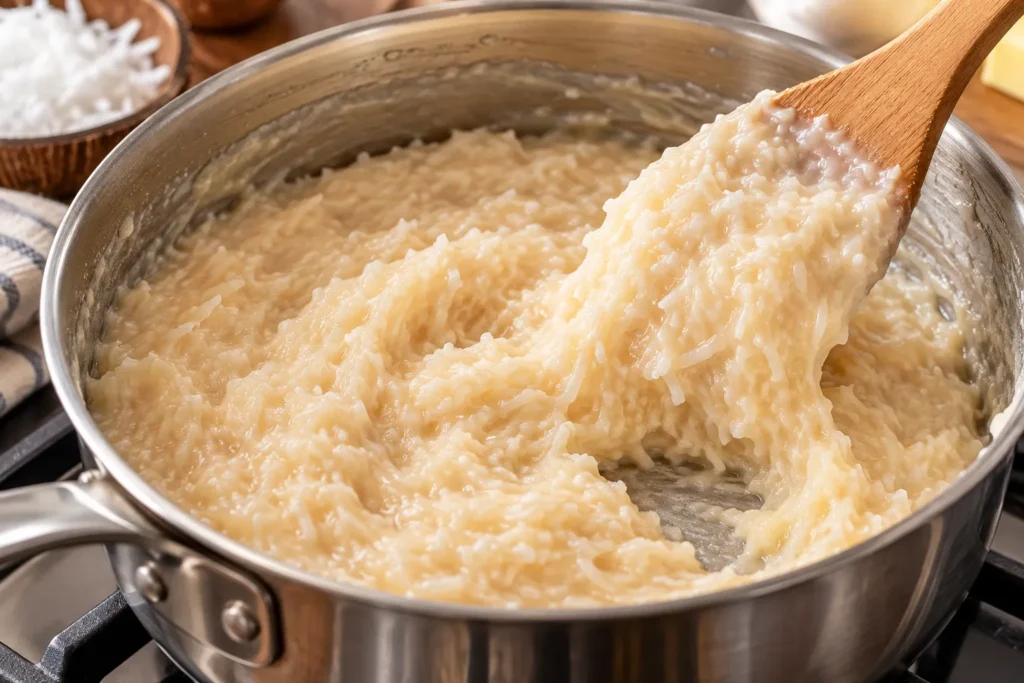
Place the sweetened condensed milk, shredded coconut, and butter in a medium, heavy-bottomed saucepan.
Cook over medium-low heat, stirring continuously with a spatula. Scrape the bottom and sides of the pan regularly to prevent the mixture from sticking or burning.
As the mixture heats, it will gradually thicken and become more cohesive. Continue cooking until it pulls away from the bottom of the pan when you drag the spatula through it. The mixture should be thick enough to hold its shape rather than spread like a sauce.
This usually takes around 10–15 minutes, although the exact time depends on the saucepan, heat level, and moisture content of the coconut.
Remove the pan from the heat and stir in the vanilla extract and salt, if using.
Step 2: Cool the Coconut Mixture
Transfer the hot coconut mixture to a lightly buttered plate or shallow dish.
Spread it into an even layer and allow it to cool to room temperature. Once it has cooled, cover it and refrigerate for approximately 30–60 minutes, or until firm enough to shape.
Do not try to roll the mixture while it is still hot. Cooling makes it easier to handle and helps the candies maintain their shape during caramel coating.
Step 3: Shape the Coconut Balls
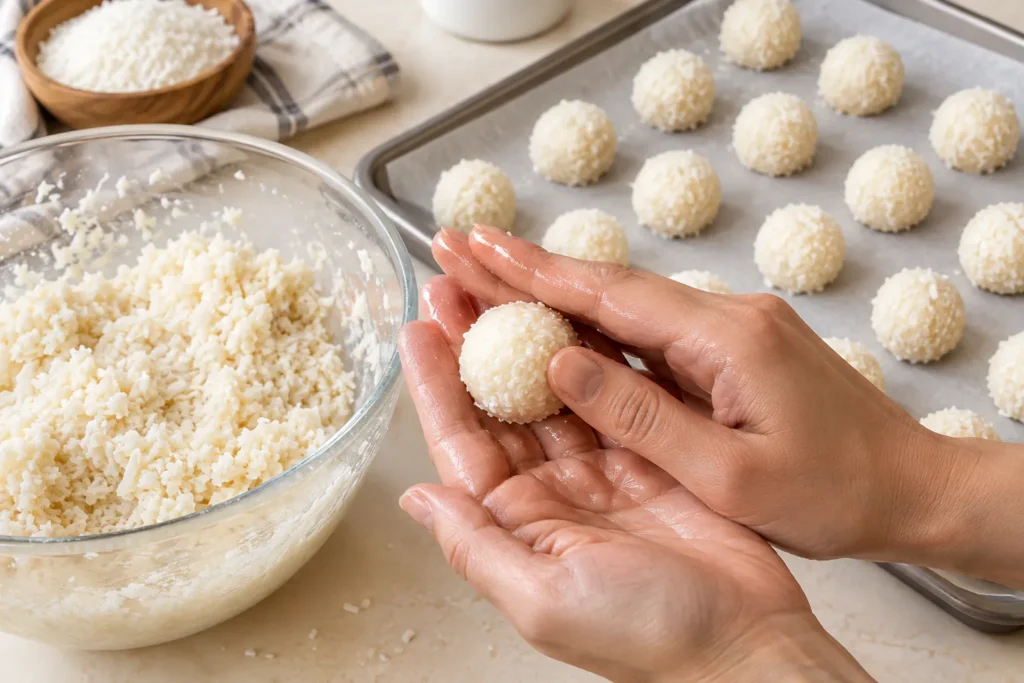
Lightly butter your hands or use food-safe gloves to reduce sticking.
Take a small portion of the chilled coconut mixture and roll it between your palms to form a smooth ball. Aim for approximately 2.5–3 cm in diameter.
Place each ball on the prepared tray, leaving a little space between them. Continue until you have used all the filling.
If the mixture becomes too soft while shaping, return it to the refrigerator for another 10–15 minutes.
Once all the balls are shaped, refrigerate them until firm. Keep them chilled while you prepare the caramel, but make sure the surface is not wet or covered with condensation before dipping.
Step 4: Prepare the Caramel Syrup
Before you begin, line a tray with parchment paper or a silicone baking mat and place it close to the stove. Have your dipping tool ready because the caramel hardens quickly.
Add the granulated sugar, water, and vinegar or lemon juice to a clean, heavy-bottomed saucepan.
Place the saucepan over medium heat and allow the sugar to dissolve. Once the syrup starts boiling, avoid stirring it. If sugar crystals appear on the sides of the pan, carefully brush them down with a clean pastry brush dipped in water.
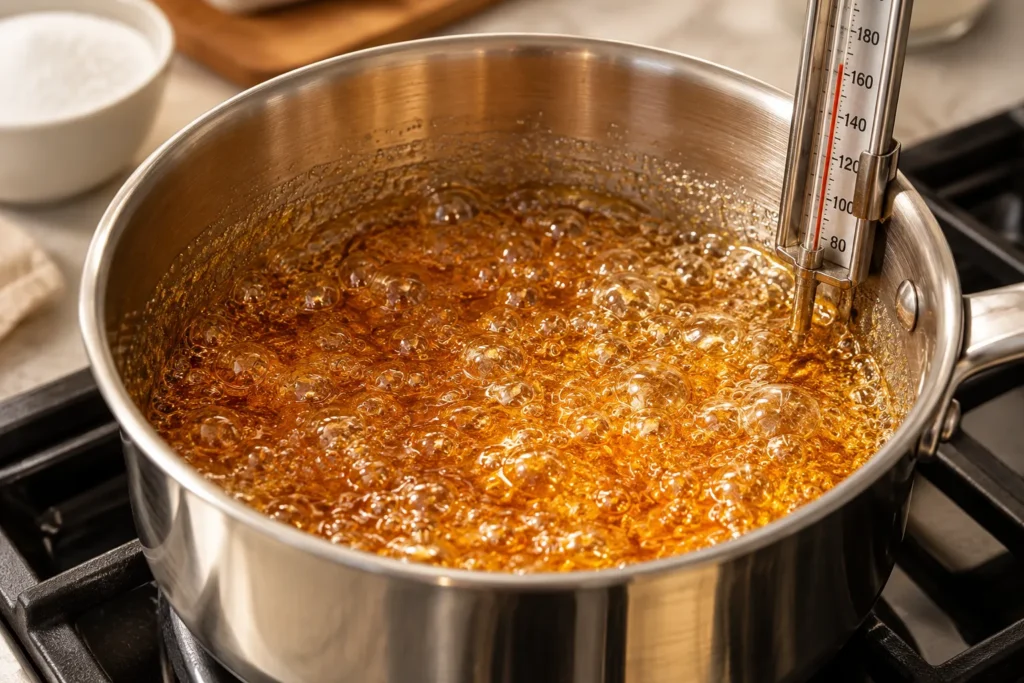
Continue boiling until the syrup reaches the hard-crack stage, approximately 149–154°C (300–310°F) on a candy thermometer.
At this temperature, the caramel should set into a brittle, crisp shell rather than remain sticky or chewy.
If you do not have a thermometer, carefully drop a tiny amount of syrup into cold water. It should harden immediately into brittle threads that snap when bent. Take care when handling the hot syrup and never taste it while hot.
Step 5: Dip the Coconut Balls in Caramel
Reduce the heat to the lowest setting once the caramel reaches the correct temperature. Keep the pan over gentle heat only as needed to maintain the caramel’s fluidity without allowing it to darken or burn.
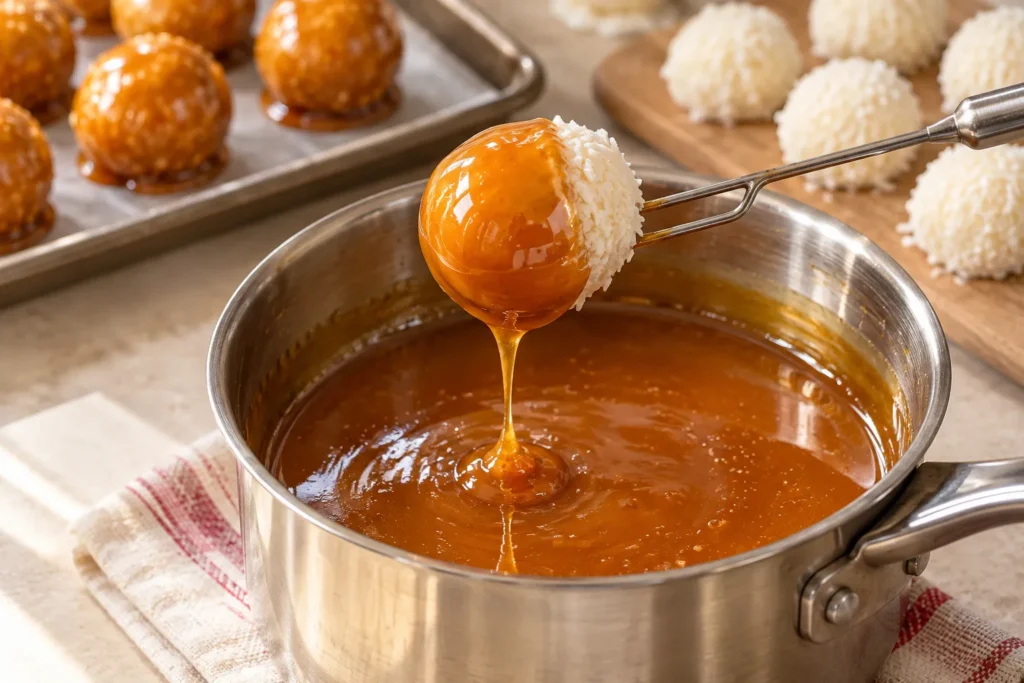
Working quickly, use a fork or dipping tool to lower one chilled coconut ball into the caramel. Turn it gently to coat the surface, then lift it out and allow excess caramel to drip back into the pan.
Place the coated candy on the prepared tray. Repeat with the remaining coconut balls.
The caramel will begin hardening almost immediately, so work efficiently. If the syrup becomes too thick, warm it gently for a short time. Avoid adding water to hot caramel, as it can splatter dangerously.
Important safety note: Hot sugar syrup can cause severe burns and is much hotter than boiling water. Keep children and pets away from the cooking area, avoid touching the caramel, and do not attempt to handle it with your fingers.
Step 6: Let the Caramel Shell Harden
Allow the coated candies to cool completely at room temperature for approximately 10–20 minutes, depending on their size and the room temperature.
Once the caramel has set, each candy should have a firm, glossy exterior that cracks when bitten. The coconut center should remain soft and creamy.
Avoid placing freshly coated candies in the refrigerator to speed up cooling. Moisture and condensation can make the caramel sticky and soften the crisp shell.
Step 7: Serve and Enjoy
Arrange the finished Bala Baiana candies on a serving plate or in individual mini paper cups.
For the best texture, serve them soon after the caramel has hardened. The contrast between the crisp shell and the creamy coconut center is at its best when the coating is dry and crunchy.
Tips for Perfect Crispy Caramel Bala Baiana
Cook the Coconut Filling Until Thick
The filling needs to be firm enough to roll without sticking excessively to your hands. If it is undercooked, the balls may flatten or become difficult to dip.
Use Finely Shredded Coconut
Fine or desiccated coconut produces a smoother, more cohesive center. Very long coconut strands can make the mixture harder to shape into neat balls.
Chill the Balls Before Dipping
Cold, firm coconut balls are easier to handle and help the caramel coating set around the filling. However, avoid dipping balls with visible moisture or condensation.
Use a Candy Thermometer
Caramel temperature is one of the most important factors in this recipe. If the syrup does not reach the hard-crack stage, the coating may remain sticky or chewy instead of crisp.
Work Quickly but Carefully
The caramel sets fast. Prepare the tray, coconut balls, and dipping tool before cooking the syrup so you do not have to search for anything while handling hot caramel.
Keep the Caramel Thin
A thin coating provides the signature crunch without overpowering the coconut center. Allow excess syrup to drip off before placing each candy on the tray.
Avoid Humidity When Possible
Sugar attracts moisture from the air. On humid days, the caramel may soften more quickly, so prepare the candies close to serving time and keep them in a cool, dry place.
Common Mistakes and How to Fix Them
| Problem | Possible cause | How to prevent it |
|---|---|---|
| Caramel stays sticky | Syrup did not reach the hard-crack stage, or the air is humid | Check the temperature and coat the candies close to serving time |
| Caramel tastes bitter | Sugar was cooked too long or became too dark | Remove the syrup from the heat once it reaches the correct temperature |
| Coconut balls fall apart | Filling was too soft or insufficiently chilled | Cook until thick and refrigerate before shaping |
| Caramel coating is too thick | Candy was dipped too slowly or excess syrup was not drained | Dip quickly and let excess caramel drip away |
| Sugar crystallizes | Sugar crystals remained on the pan sides or the syrup was stirred after boiling | Use a clean pan, add vinegar or lemon juice, and avoid stirring during boiling |
| Coating becomes dull | Condensation or moisture formed on the caramel | Cool at room temperature and store in a dry environment |
Delicious Variations
Toasted Coconut Bala Baiana
Toast a small portion of the shredded coconut in a dry pan until lightly golden, then mix it with the remaining coconut before cooking the filling. The toasted coconut adds a deeper flavor and a subtle nutty note.
Vanilla Coconut Caramel Candies
Add a little vanilla extract to the filling after removing it from the heat. Vanilla complements the sweetness of the condensed milk and gives the center a warm, dessert-like flavor.
Coconut and Lime Bala Baiana
Add a small amount of finely grated lime zest to the finished coconut mixture. The citrus aroma balances the sweetness and adds a fresh note.
Mini Bala Baiana
Make smaller balls for bite-sized treats. Smaller candies are ideal for dessert tables, although they require careful dipping because the caramel hardens quickly.
Coconut Candy with a Dark Caramel Shell
Allow the caramel to reach the darker end of the recommended temperature range without burning it. A slightly deeper caramel flavor contrasts beautifully with the sweet coconut center.
How to Store Bala Baiana
Bala Baiana is best enjoyed shortly after the caramel shell has hardened, while the coating remains crisp.
Store the candies in a cool, dry environment in a single layer, away from direct sunlight, steam, and humidity. Avoid airtight containers if condensation is likely to form, but protect the candies from dust and moisture.
Because the filling contains condensed milk and moisture, long room-temperature storage is not recommended. For food safety, refrigerate leftovers in a covered container and consume them promptly, ideally within 2–3 days. Be aware that refrigeration may soften or make the caramel coating sticky.
For the best texture, prepare only the amount you expect to serve and coat the coconut balls close to serving time.
Can You Make Bala Baiana Ahead of Time?
Yes. You can prepare and shape the coconut filling a day ahead, then refrigerate the uncoated balls in a covered container.
For the best results, prepare the caramel and coat the candies on the day you plan to serve them. This helps preserve the crisp exterior and creamy center.
Avoid coating the candies several days in advance because moisture from the filling and the surrounding air can gradually soften the caramel.
Frequently Asked Questions
What does Bala Baiana taste like?
Bala Baiana tastes sweet, creamy, and coconut-rich inside, with a crisp caramel shell on the outside. The contrast between the soft center and brittle coating makes it different from ordinary coconut truffles.
Why is my caramel not crunchy?
The most common reason is that the syrup did not reach the hard-crack stage. For a brittle coating, aim for approximately 149–154°C (300–310°F). Humidity can also make the shell sticky after it has cooled.
Can I make this recipe without a candy thermometer?
Yes. Use the cold-water test: a small drop of syrup should harden into brittle threads that snap when bent. However, a candy thermometer is more reliable, especially if you are new to making caramel.
Can I use sweetened shredded coconut?
Yes, but the filling will be sweeter and may have a different texture. Unsweetened desiccated coconut is generally easier to balance with sweetened condensed milk.
Why is my coconut filling too soft?
It may need more cooking time or additional chilling. Cook the mixture until it pulls away from the pan, then refrigerate it until firm before shaping the balls.
Can I freeze Bala Baiana?
Freezing the finished candies is not ideal because condensation during thawing can damage the crisp caramel shell. You can prepare the coconut filling ahead, but for the best texture, shape and coat the candies closer to serving time.
How do I keep the caramel from sticking to the tray?
Use a silicone baking mat or good-quality parchment paper. Allow the candies to cool completely before lifting them. Do not place the candies on a wet or greasy surface.
Is Bala Baiana the same as coconut truffles?
Not exactly. Coconut truffles usually have a soft exterior, while Bala Baiana is distinguished by its hard, crunchy caramel coating surrounding a creamy coconut center.
Final Thoughts
Crispy Caramel Bala Baiana with a Creamy Coconut Center is a delightful Brazilian-inspired sweet that combines simple ingredients with an impressive result. The tender coconut filling, glossy caramel coating, and satisfying crunch make these candies a memorable addition to any dessert table.
For the best outcome, cook the coconut mixture until firm, chill the balls thoroughly, and bring the caramel to the correct temperature. Prepare the coating close to serving time, and enjoy these little coconut candies while their caramel shell is still crisp.